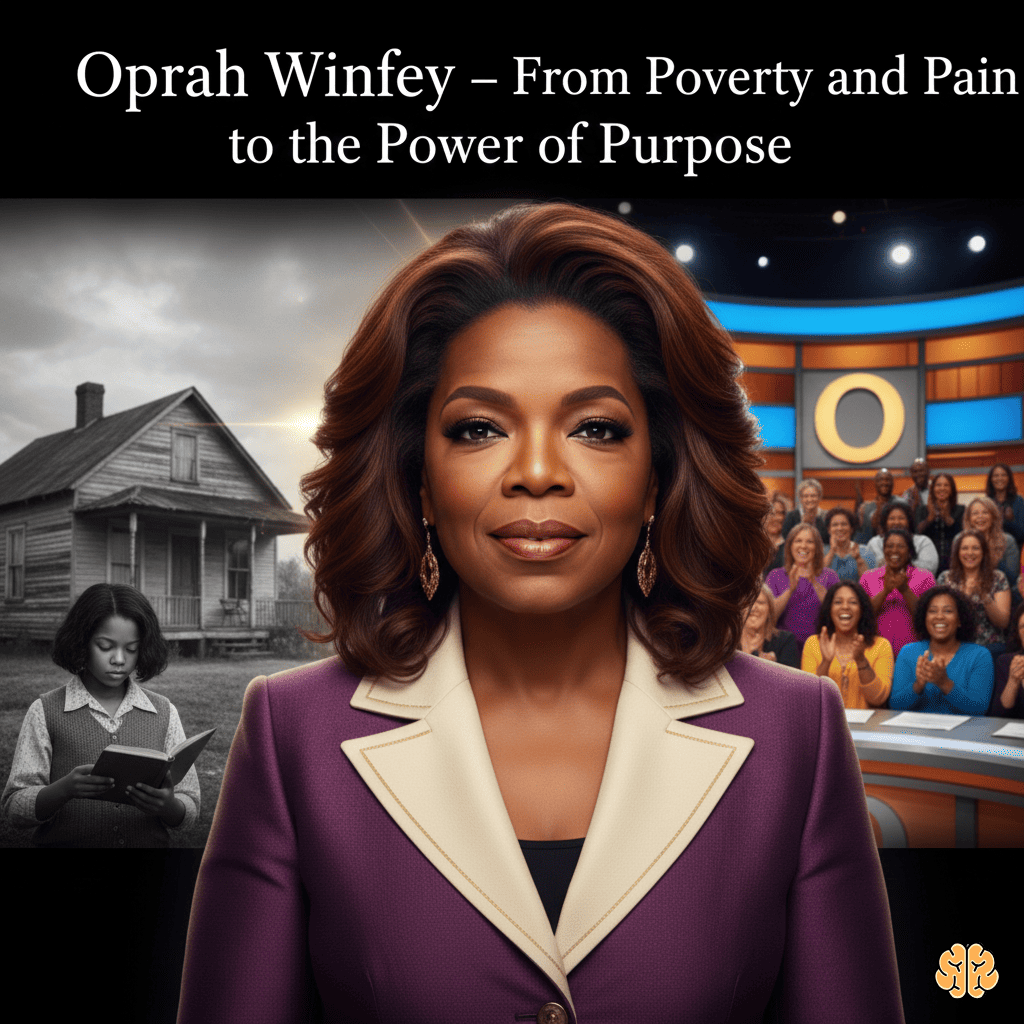
Oprah Winfrey – From Poverty and Pain to the Power of Purpose
By: Compiled from various sources | Published on Dec 22,2025
Category Moral Stories
The Story
This is the story of a girl born into crushing poverty in rural Mississippi in 1954, a time and place where being Black, female, and poor meant the odds were stacked impossibly against you. Her name was Oprah Gail Winfrey, and by every statistical measure, she should not have made it.
Oprah's childhood was marked by trauma that would have broken most people. Born to an unmarried teenage mother, she spent her early years living with her grandmother in such poverty that she wore dresses made from potato sacks. The other children mocked her relentlessly. At age six, she was sent to live with her mother in Milwaukee, where she endured unspeakable abuse—molested by family members and family friends from age nine onwards.
At 14, she became pregnant. The baby, born prematurely, died shortly after birth. She was a traumatized teenager with every reason to give up, every excuse to fail, every justification to be bitter and broken.
But something in Oprah refused to let her circumstances define her destiny.
She found refuge in books and education. Despite everything happening at home, she excelled in school. Her father, whom she went to live with in Nashville, was strict about education—she had to read books and write reports every week. This discipline, though hard, gave her structure and hope.
At 19, while still in college, Oprah became the youngest and first Black female news anchor at Nashville's WLAC-TV. But her real breakthrough came when she moved into talk shows—a medium that let her do what she did naturally: connect with people, share stories, and create space for honest, emotional conversations.
In 1986, "The Oprah Winfrey Show" went national. What happened next changed media history. For 25 years, Oprah's show wasn't just entertainment—it was a cultural force. She talked about things no one else would: child abuse, racism, weight struggles, spirituality, self-improvement. She made it safe for people to be vulnerable, to tell their truth, to heal.
But here's what makes Oprah's story truly extraordinary: she didn't just become successful despite her pain. She became successful because of how she transformed her pain into purpose.
Every trauma she endured became a bridge to help others. Her abuse made her an advocate for abused children—she testified before Congress to establish a national database of convicted child abusers (the "Oprah Bill" became law in 1993). Her poverty made her generous—she's donated hundreds of millions to education and empowerment. Her struggles with weight made her honest about body image in ways that helped millions feel less alone.
She built a media empire worth billions, yes. But more importantly, she built a legacy of using your story—however painful—to serve others.
Why This Story Resonates
Think about the narratives we tell ourselves when life is hard. "I can't succeed because of my past." "My trauma has ruined me." "People from my background don't make it." "I'm too damaged to do great things."
Oprah had every single one of those excuses available to her, backed by devastating reality. Yet she chose a different story: "My past doesn't define my future. My pain can become my purpose. My struggles make me uniquely qualified to help others who are struggling."
We live in a culture that often celebrates people who had every advantage and still succeeded. But Oprah's story is different—and in some ways more powerful. She had almost no advantages. What she had was refusal to let circumstances have the final word about who she would become.
The Deeper Wisdom
Oprah's life reveals a profound truth: your greatest pain can become your greatest platform, but only if you're willing to transform it rather than be destroyed by it.
This doesn't mean your trauma was "meant to happen" or that abuse is somehow justified because good came from it later. No. What happened to Oprah was wrong, unjust, inexcusable. The deeper wisdom is about what you do after the inexcusable happens.
You can let it define you as a victim forever. Or you can alchemize it—take the raw material of your suffering and forge it into something that serves not just yourself, but others. Not by pretending it didn't hurt. Not by skipping the healing process. But by eventually asking: "Now that this happened, what am I going to do with it?"
Oprah found her purpose by turning her private pain into public conversations that helped millions. Your platform might not be a TV show watched by millions. But your pain transformed into purpose might help one person, ten people, a hundred—and that matters just as much.
The other crucial truth in Oprah's story: she surrounded herself with people who believed in her potential even when circumstances suggested she had none. Her father's discipline. Teachers who encouraged her. Mentors who saw her gifts. You cannot do this alone. Healing requires community. Success requires support.
Living This Truth
Stop hiding your story because you're ashamed of what happened to you. Your story—the real one, with all its mess and pain—is your superpower. Not because pain is good, but because vulnerability and authenticity connect us in ways that perfect, polished success stories never can.
Ask yourself: "What pain have I experienced that could become a bridge to help others?" Your addiction, your divorce, your failure, your trauma—someone else is going through that right now and feeling utterly alone. Your willingness to say "me too, and here's what helped me survive" could be the lifeline they desperately need.
Invest in your own healing and growth, just like Oprah's father insisted on education and discipline. You can't serve from an empty well. Read the books. Do the therapy. Find the mentors. Build the skills. Your purpose requires you to become the healthiest, most developed version of yourself.
And most importantly: don't wait until you're fully healed to start helping others. Oprah didn't wait until she had processed all her trauma perfectly before she began using her platform. Healing and serving happen simultaneously. Your mess becomes your message while you're still in the middle of it.
The Moral
Your circumstances don't determine your destiny—your response to your circumstances does. The same trauma that destroys one person becomes the fuel that transforms another into a force for healing in the world.
You don't need a perfect past to create a powerful future. You need the courage to transform your pain into purpose and your struggles into service.
Your Reflection Today
What pain or struggle have you been hiding because you're ashamed of it? What if that's exactly the story someone else needs to hear?
If you could use your greatest difficulty as a platform to help others facing the same thing, what would that look like?
Who do you need in your corner—mentors, therapists, friends—who will believe in your potential even when your circumstances suggest you have none?
Oprah's story isn't just about becoming rich or famous. It's about refusing to let what happened to you write the ending of your story. It's about taking the worst things life gave you and somehow, impossibly, turning them into gifts you offer the world.
Your pain is not wasted if you refuse to waste it. Your story is not over just because some chapters were devastating.
You get to write what comes next. And what comes next could help more people than you ever imagined.
The little girl in potato sacks became the woman who changed how millions of people see themselves, heal their wounds, and reach for their dreams.
What could the person who's been through what you've been through become?
Start writing that story today.
Amazon Affiliate Disclosure
As an Amazon Associate I earn from qualifying purchases.
Comments
No comment yet. Be the first to comment