Be Like Water
By: Bruce Lee | Published on Feb 05,2026
Category Spiritual Quotes
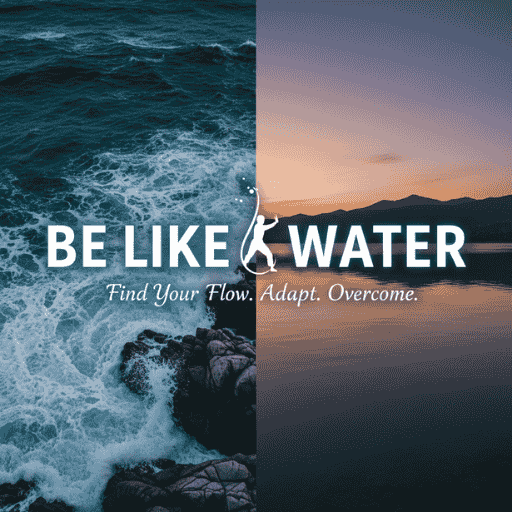
"Be like water making its way through cracks. Do not be assertive, but adjust to the object, and you shall find a way around or through it. If nothing within you stays rigid, outward things will disclose themselves. Empty your mind, be formless. Shapeless, like water. If you put water into a cup, it becomes the cup. You put water into a bottle and it becomes the bottle. You put it in a teapot, it becomes the teapot. Now, water can flow or it can crash. Be water, my friend."
About This Quote
This profound philosophical teaching comes from Bruce Lee (1940-1973), the legendary martial artist, actor, filmmaker, and philosopher who revolutionized martial arts and transcended cultural boundaries. This quote is from a 1971 interview on "The Pierre Berton Show," though Lee had been teaching this water philosophy for years before that televised moment made it famous worldwide.
Lee wasn't just offering martial arts advice—he was sharing a complete life philosophy drawn from Taoist teachings, particularly the Tao Te Ching's concept of Wu Wei (effortless action). Having studied philosophy at the University of Washington and deeply explored Eastern wisdom traditions, Lee synthesized ancient wisdom with his own insights from martial arts and life experience. "Be water" became his signature teaching, capturing the essence of adaptability, flow, and power through flexibility rather than rigidity.
Why It Resonates
Think about how you typically approach obstacles in your life. You push against them. You try to force your way through. You become rigid, insistent, assertive—determined to impose your will on the situation. And when that doesn't work, you push harder. You become more stubborn. You double down on your approach even when it's clearly not working.
This is like being ice—solid, rigid, unchanging. And what happens to ice when it meets an immovable obstacle? It breaks. It shatters. It fails. Your rigid approach to life's challenges leaves you broken, frustrated, and defeated when you encounter resistance you can't overcome through force.
But water? Water doesn't break against obstacles. Water finds a way around them. Water flows into cracks, seeps through gaps, goes over barriers, carves through resistance slowly and persistently. Water doesn't fight the shape of its container—it becomes the container. Water doesn't insist on being one form—it adapts to whatever form the situation requires.
And here's what's remarkable: water is simultaneously the softest substance (it has no shape of its own) and one of the most powerful forces in nature (it carves canyons through solid rock). Not despite its fluidity, but because of it. Water's power comes from its complete lack of rigidity.
This is the wisdom Bruce Lee wants you to understand: your rigidity is making you weak. Your insistence on having your way, your attachment to specific methods, your refusal to adapt—these are not signs of strength. They're vulnerabilities. They're the reasons you keep failing when life doesn't conform to your expectations.
The Philosophy Behind It
This teaching is deeply rooted in Taoist philosophy, particularly the Tao Te Ching written by Lao Tzu around 400 BCE. Chapter 78 states: "Under heaven nothing is more soft and yielding than water. Yet for attacking the solid and the strong, nothing is better; it has no equal. The weak can overcome the strong; the supple can overcome the stiff."
Taoism teaches that true strength comes through yielding, not forcing. The bamboo survives the storm by bending while the rigid oak breaks. Water wears away stone not through force but through persistence and adaptability. This is Wu Wei—acting without forcing, achieving without struggle, power through flow rather than resistance.
Zen Buddhism contains similar teachings. The beginner's mind—shoshin—is formless, open, adaptable. The master's mind is like water: it can hold any shape, adapt to any situation, respond appropriately to changing circumstances. Rigidity is ignorance. Fluidity is wisdom.
Bruce Lee also drew from his martial arts experience. In Jeet Kune Do, his martial arts philosophy, he taught "using no way as way, having no limitation as limitation." Don't be trapped by style or form. Adapt to the opponent. Flow like water around their defenses. Be formless so you can take any form that the situation requires.
Modern psychology validates this ancient wisdom through research on psychological flexibility—the ability to adapt your behavior to match your values and goals in different contexts. Studies show that psychological rigidity (insisting things must be a certain way) is associated with anxiety, depression, and reduced wellbeing. Psychological flexibility—being like water—is associated with resilience, better mental health, and life satisfaction.
The Deeper Meaning
This quote is teaching you about the relationship between form and formlessness, between assertion and adaptation, between force and flow. Most people think power comes from strength, from imposing your will, from being unmovable. Lee is teaching the opposite: true power comes from having no fixed form, from being completely adaptable, from flowing around resistance rather than crashing against it.
"Empty your mind, be formless, shapeless" isn't about having no identity or values. It's about not being imprisoned by rigid beliefs about how things "must" be. Your mind is full of fixed ideas: "This is how I am." "This is how things should work." "This is the right way." These fixed ideas make you brittle. When reality doesn't match your fixed ideas, you break.
But if you empty your mind of rigid forms, you can adapt to reality as it actually is, not as you insist it should be. You can be the cup when the situation requires a cup. You can be the bottle when circumstances call for a bottle. You can be the teapot when that form serves your purpose.
The profound paradox: by having no permanent form, you can take any form. By insisting on no particular way, you can use any way. By being empty, you can be filled with whatever the situation requires. This isn't weakness or lack of identity—it's the ultimate adaptability.
"Water can flow or it can crash" captures another crucial truth: adaptability doesn't mean passivity. Water flows gently around obstacles when that's effective. But water also crashes with tremendous force when that's what's needed. The key is appropriateness—responding to each situation with whatever approach actually works, not rigidly using the same approach regardless of context.
The deepest wisdom: you are not your current form. You are the consciousness that can take any form. You are not your current strategy. You are the intelligence that can adapt strategy. You are not your fixed ideas about yourself. You are the awareness that can grow beyond any limitation.
Living This Truth
Notice your rigidity. When you're stuck, frustrated, repeatedly failing—that's usually a sign you're being ice instead of water. You're insisting on one approach, one form, one way of seeing things. Pause and ask: "Where am I being rigid? What fixed form am I clinging to?"
Practice adapting instead of forcing. When you encounter an obstacle, instead of pushing harder against it, look for the cracks. Look for the way around. Look for a different approach. Be willing to change your method, your strategy, your form—whatever it takes to flow toward your goal rather than break against resistance.
Let go of "I am this way." Every statement of permanent identity creates rigidity. "I'm not a morning person." "I'm not good with people." "I'm not creative." These fixed ideas about yourself limit your ability to adapt. You're not a fixed form—you're water. You can be whatever the situation requires.
Develop multiple approaches. Water flows, seeps, crashes, evaporates, condenses, freezes—it has many forms. Don't be the person with only one strategy. Develop multiple ways of approaching challenges. Be formless enough to choose the appropriate form for each situation.
Practice Wu Wei—effortless action. Notice when you're struggling and straining. Often, that means you're forcing instead of flowing. Can you achieve your goal with less force, more flow? Can you let the situation's natural movement carry you toward your objective instead of fighting against it?
Empty your mind regularly. Meditation, reflection, questioning your assumptions—these practices help you release rigid forms and return to formlessness. Don't hold onto ideas, identities, or strategies past their usefulness. Stay fluid. Stay adaptable. Stay formless so you can take any form.
Your Reflection Today
Where in your life are you being ice (rigid, unadaptable, breaking against obstacles) instead of water (flexible, flowing, finding ways through)?
What fixed idea about yourself or how things "should" be is creating rigidity in your life right now?
If you were truly like water—formless, adaptable, able to take any shape—how would you approach your current challenges differently?
Here's what Bruce Lee wants you to understand: Your approach to life is backwards. You think strength comes from being solid, fixed, unmovable. You think power comes from imposing your will. You think success requires forcing your way through obstacles.
But you're wrong. And that's why you keep breaking. That's why you keep failing. That's why obstacles that water would flow around instead shatter you.
You're being ice when you need to be water.
Ice is rigid. Ice has a fixed form. Ice doesn't adapt. And when ice meets an obstacle it can't overcome? Ice breaks. Ice fails. Ice shatters into pieces.
But water? Water finds a way. Always. Not through force. Through adaptability. Through flow. Through having no fixed form that can be broken.
Think about the obstacles you're facing right now. The challenges that seem impossible. The situations where you keep trying the same approach and getting the same disappointing results. You're being rigid. You're insisting on one way. You're attached to a particular form or strategy or identity.
And that rigidity is your weakness, not your strength.
What if you became formless? What if you let go of your fixed ideas about how things "must" be? What if you stopped pushing against the obstacle and instead looked for the cracks, the gaps, the ways around or through?
Water doesn't fight the shape of its container—it becomes the container. Water doesn't insist on flowing in one direction—it flows wherever there's an opening. Water doesn't remain in one form—it evaporates, condenses, freezes, melts, whatever the situation requires.
That's not weakness. That's ultimate adaptability. That's true power.
You think you need to be stronger, pushier, more forceful to overcome your obstacles. But what you actually need is to be more like water. More flexible. More adaptable. More willing to change form to fit the situation.
Empty your mind of fixed ideas about who you are, how things should work, what the "right" approach is. Be formless. Shapeless. Like water.
Not because you have no identity, but because your true identity isn't any fixed form—it's the consciousness that can take any form. You are not your current shape. You are the water that can become any shape.
Your challenges aren't asking you to push harder. They're asking you to flow differently. To adapt. To find the cracks. To become the shape that this particular situation requires.
Water can flow. Water can crash. Water can be gentle. Water can be powerful. But water is always appropriate to the situation. Always finding a way. Always adapting.
Be water, my friend.
Not ice. Not rigid. Not fixed in form or strategy or identity.
Water. Formless. Shapeless. Adaptable. Flowing around every obstacle. Finding a way through every challenge.
That's true strength. That's real power. That's how you overcome what force cannot overcome.
Be water. 💧🌊
Amazon Affiliate Disclosure
As an Amazon Associate I earn from qualifying purchases.
Comments
No comment yet. Be the first to comment